.png)
Understanding AC Dust Storm Damage in Phoenix
- Jun 3
- 4 min read
Phoenix homeowners are used to dust storms during the summer months. But while these storms
may only last a short time outside, but if ignored, they can create long-term problems for your HVAC system.
Dust, dirt, and debris place additional strain on your air conditioner—especially during the hottest
part of the year when your system is already working hard to keep your home cool.
Over time, dust buildup can reduce efficiency, restrict airflow, increase energy usage, and
accelerate wear on important AC components.
Here’s how Phoenix dust storms affect your AC system and what homeowners can do to reduce
long-term damage.
Why Dust Is So Hard on HVAC Systems in Phoenix
Phoenix creates one of the toughest environments for air conditioning systems in the country.
During summer:
● temperatures regularly exceed 100°F
● systems run for long hours every day
● and monsoon dust storms introduce large amounts of airborne debris
That combination creates constant stress on HVAC equipment.
Unlike mild climates, where systems cycle on and off throughout the day, Phoenix AC systems
often run continuously for extended periods during peak heat.
When dust buildup is added to the equation, cooling performance can decline quickly.
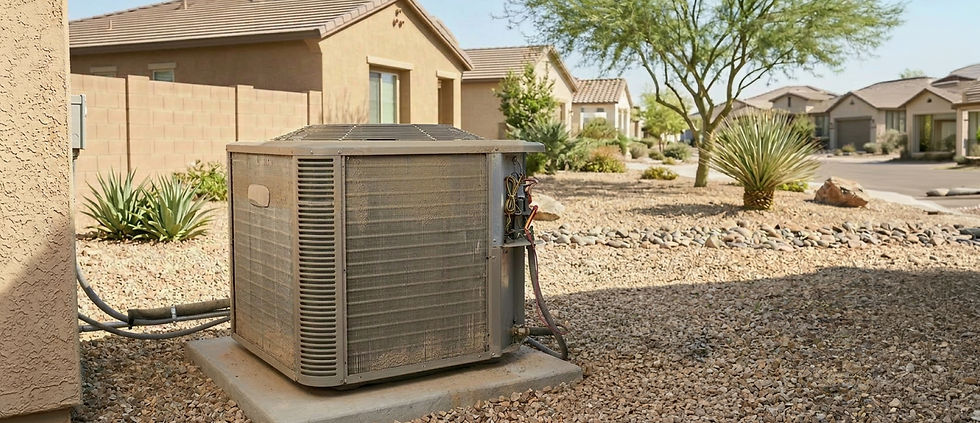
How Dust Storms Affect Your Outdoor AC Unit
Your outdoor condenser unit depends on unrestricted airflow to release heat from your home.
Dust storms interfere with that process.
As dirt and debris collect on condenser coils:
● airflow becomes restricted
● heat transfer becomes less efficient
● and the system has to work harder to maintain indoor temperatures
This can lead to:
● longer run times
● reduced cooling performance
● higher energy bills
● and increased wear on components
Even a thin layer of buildup on condenser coils can noticeably reduce efficiency over time.
Dirty Coils Can Increase System Strain
Condenser coils are responsible for helping your AC system release heat outdoors.
When coils become coated with dust:
● the system retains more heat internally
● operating temperatures rise
● and components experience additional stress
This often causes:
● reduced cooling efficiency
● inconsistent indoor comfort
● higher electrical usage
● and accelerated component wear
In extreme cases, dirty coils can contribute to compressor strain—which is one of the most
expensive HVAC repairs homeowners face.
Dust Also Impacts Indoor Airflow
Dust storms don’t only affect the outdoor unit.
Airborne debris can also impact:
● air filters
● return vents
● ductwork
● and indoor airflow
When filters clog faster than normal:
● airflow becomes restricted
● the system works harder
● and cooling performance drops
Restricted airflow can also create:
● uneven cooling
● hot rooms
● reduced comfort
● and additional strain on the blower motor
In Phoenix, filters need to be changed more frequently during the dust storm season because
of increased airborne particles.
Why Dust Problems Become Worse During Extreme Heat
During moderate weather, HVAC systems may be able to tolerate minor airflow restrictions
without major issues. Phoenix summers are different.
When temperatures remain extremely high for long periods:
● systems already operate near maximum demand
● airflow restrictions become more damaging
● and efficiency losses become more noticeable
That’s why even small maintenance issues can become larger problems during Arizona summers.
Dust buildup that may seem minor in another climate can significantly impact system
performance in Phoenix.
Signs Dust May Be Affecting Your AC System
Homeowners may notice:
● weaker airflow
● longer cooling cycles
● higher energy bills
● inconsistent temperatures
● or reduced cooling performance
Some systems may also:
● struggle during the hottest part of the day
● run continuously
● or produce warmer air than normal
These signs don’t always mean major repairs are needed, but they often indicate the system is
working harder than it should.
How Homeowners Can Protect Their AC System
While dust storms are unavoidable in Phoenix, homeowners can reduce their impact with regular
maintenance and simple preventative care.
1. Replace Air Filters Regularly
Dirty filters restrict airflow and increase strain on your system.
During peak summer months and dust storm season, filters may need to be checked more often
than homeowners expect.
2. Keep the Outdoor Unit Clear
Leaves, dirt, and debris should be kept away from the outdoor condenser unit whenever
possible.
After major dust storms, visible buildup around the unit should be cleaned carefully to improve
airflow.
3. Schedule Professional Maintenance
Routine HVAC maintenance helps identify:
● dirty coils
● airflow restrictions
● clogged drain lines
● and stressed components before larger problems develop
In Phoenix, preventative maintenance plays a major role in long-term HVAC performance.
Why Maintenance Matters More in Phoenix
In milder climates, HVAC systems often have periods of rest throughout the year.
In Phoenix, systems operate under heavy demand for extended periods during summer.
Because of this:
● airflow issues matter more
● efficiency losses happen faster
● and neglected systems tend to wear out earlier
Regular maintenance and airflow management help systems perform more reliably under
extreme conditions.
Final Thoughts
Dust storms are part of life in Phoenix—but long-term HVAC damage doesn’t have to be.
When dust buildup restricts airflow and reduces efficiency, your system works harder to cool the
same home. Over time, that additional strain affects comfort, energy usage, and long-term system performance.
With proper maintenance, filter changes, and routine inspections, homeowners can reduce the
impact of Arizona dust and help their AC systems perform more efficiently through the summer
months.
Concerned About How Dust Storm AC Damage Is Affecting Your AC?
If your system:
● struggles during extreme heat
● runs longer than normal
● or hasn’t been inspected recently
A professional AC evaluation can help identify airflow issues, dust buildup, and performance problems before they become more extensive repairs.



Comments